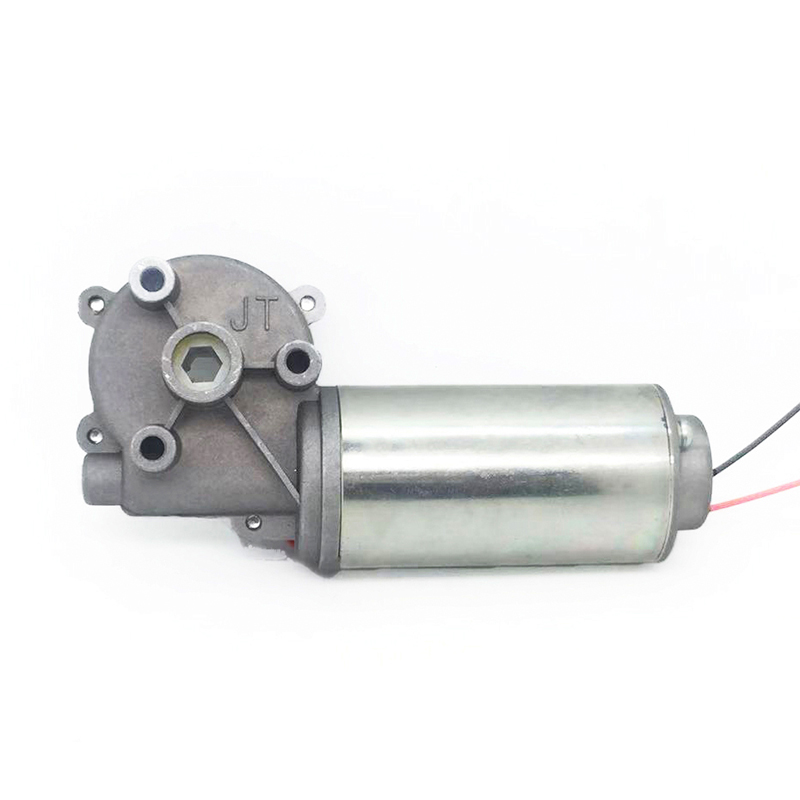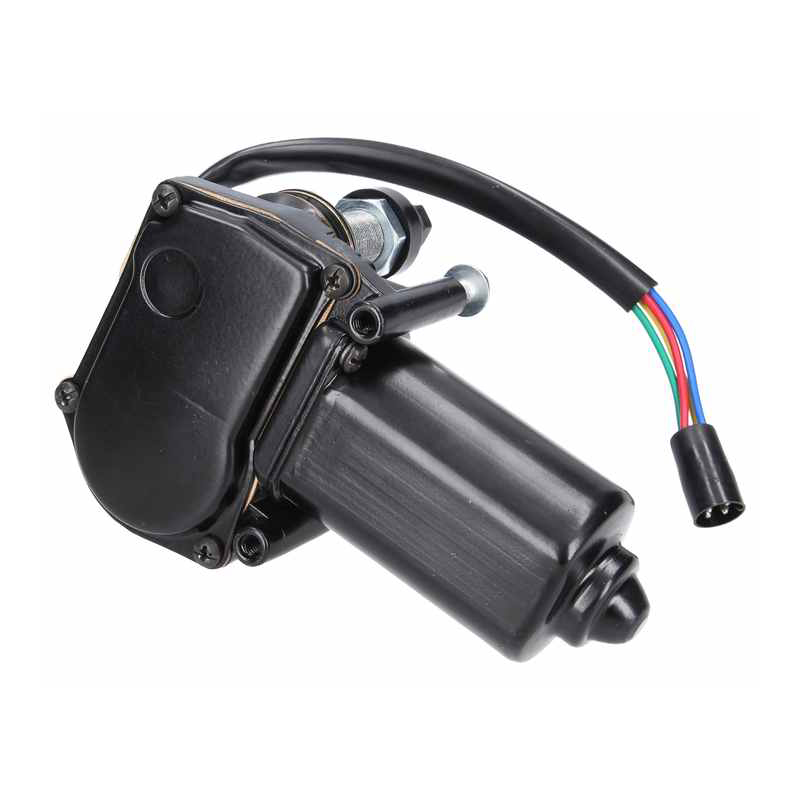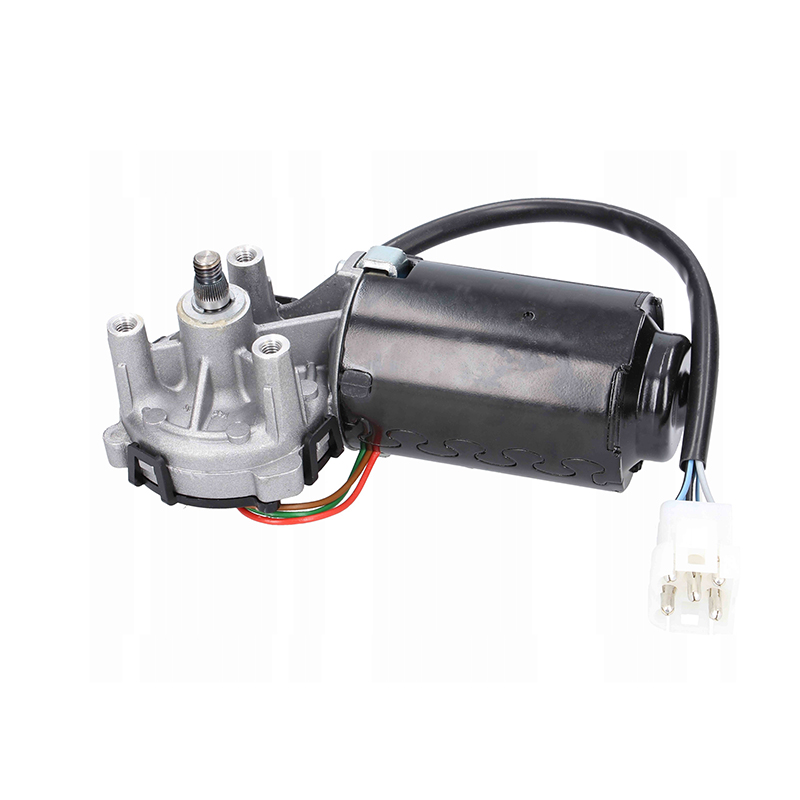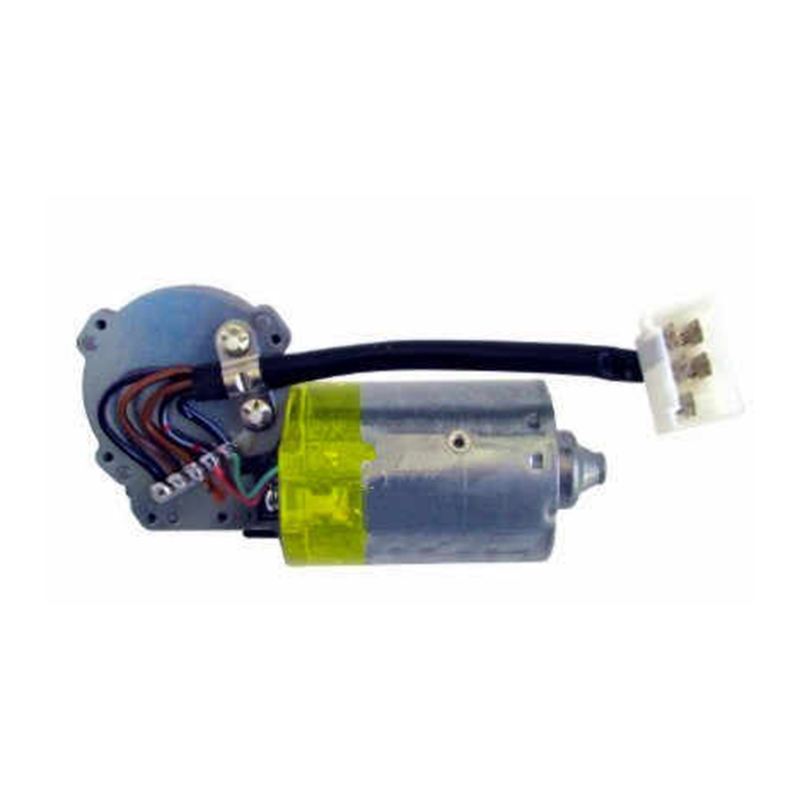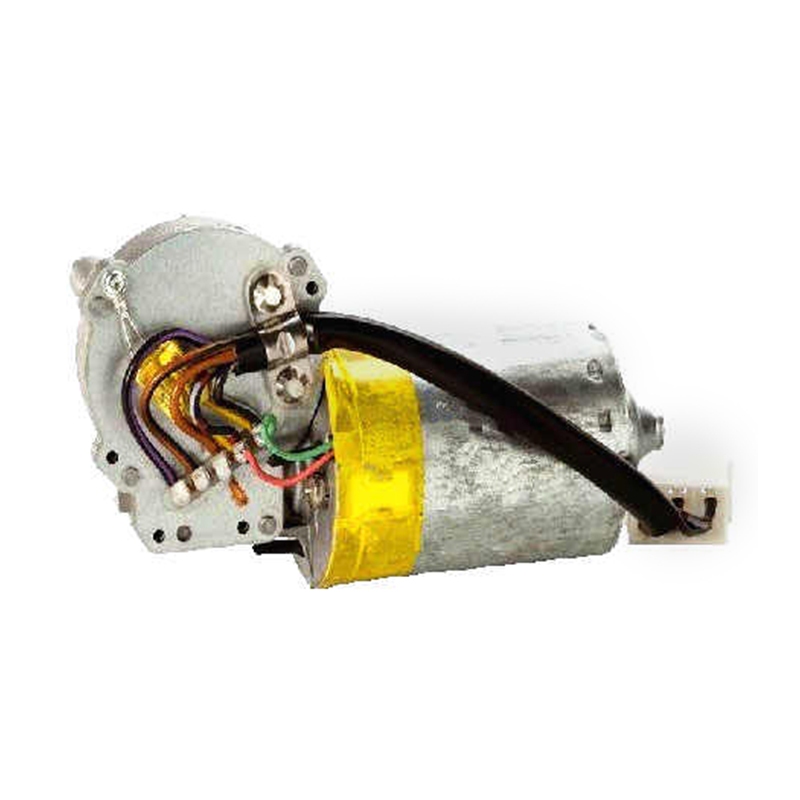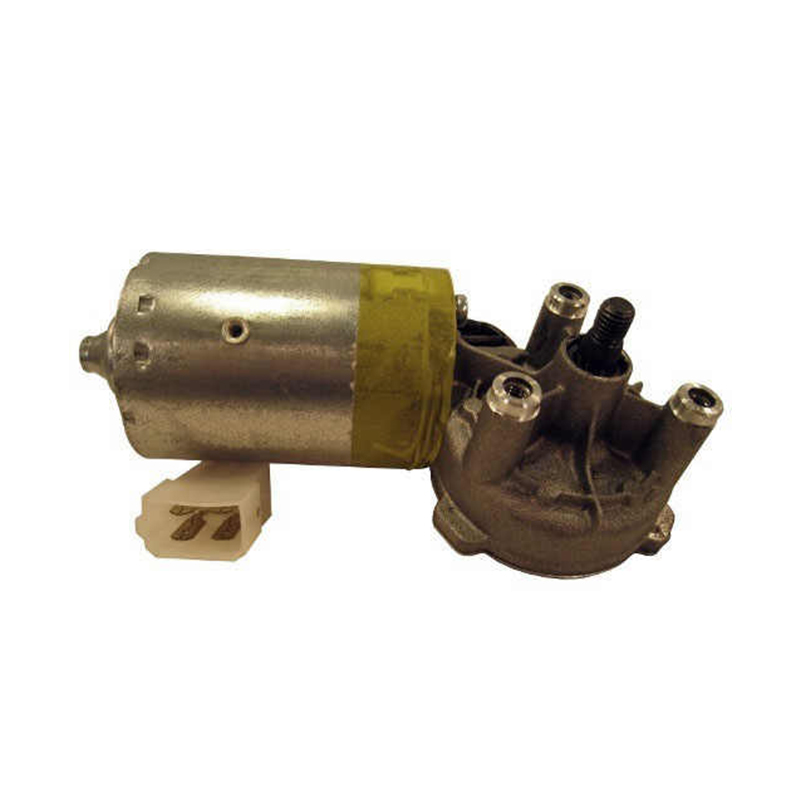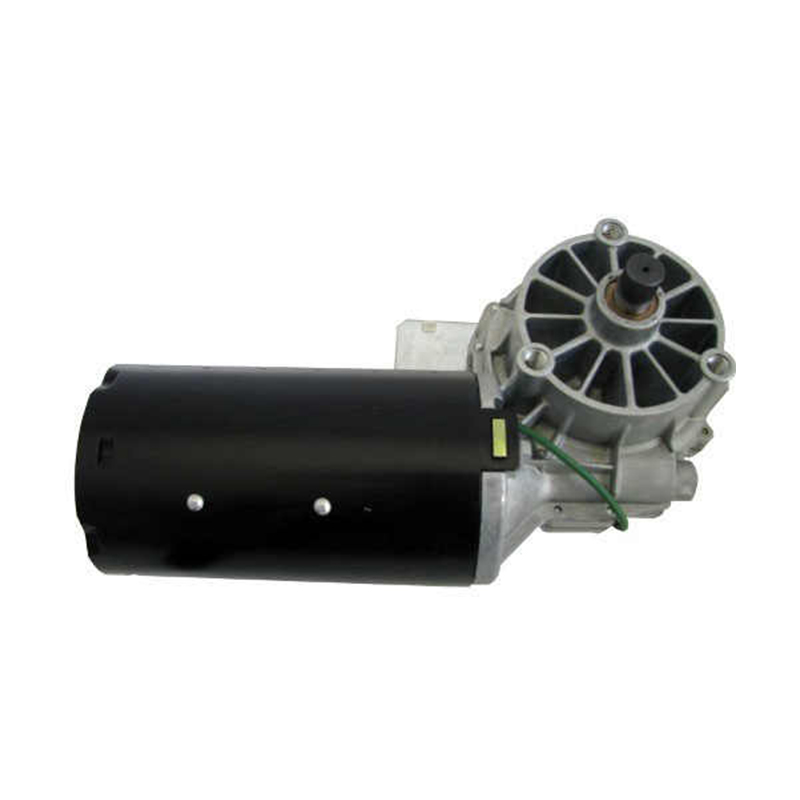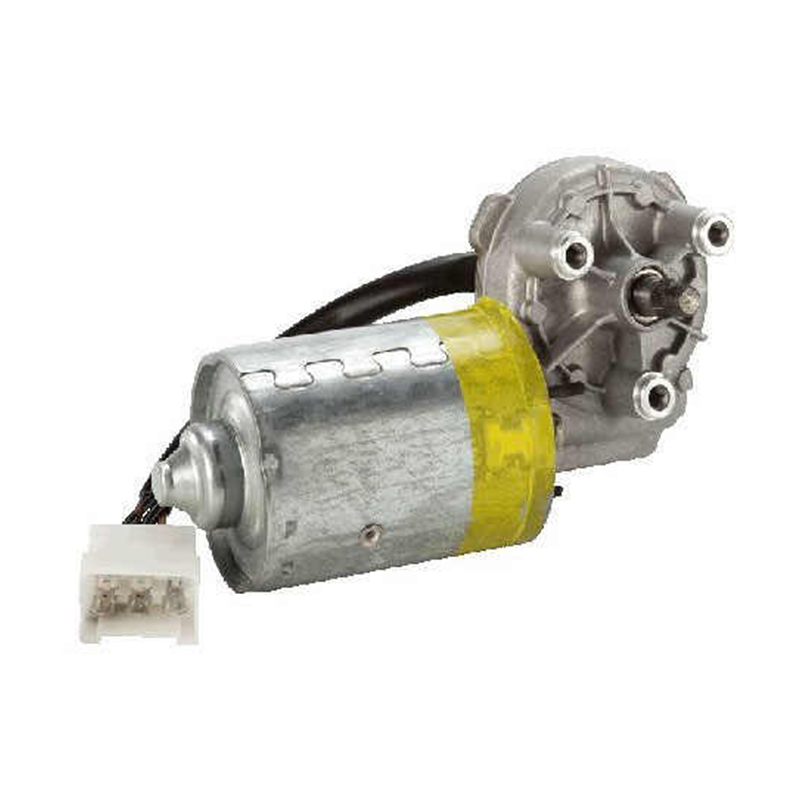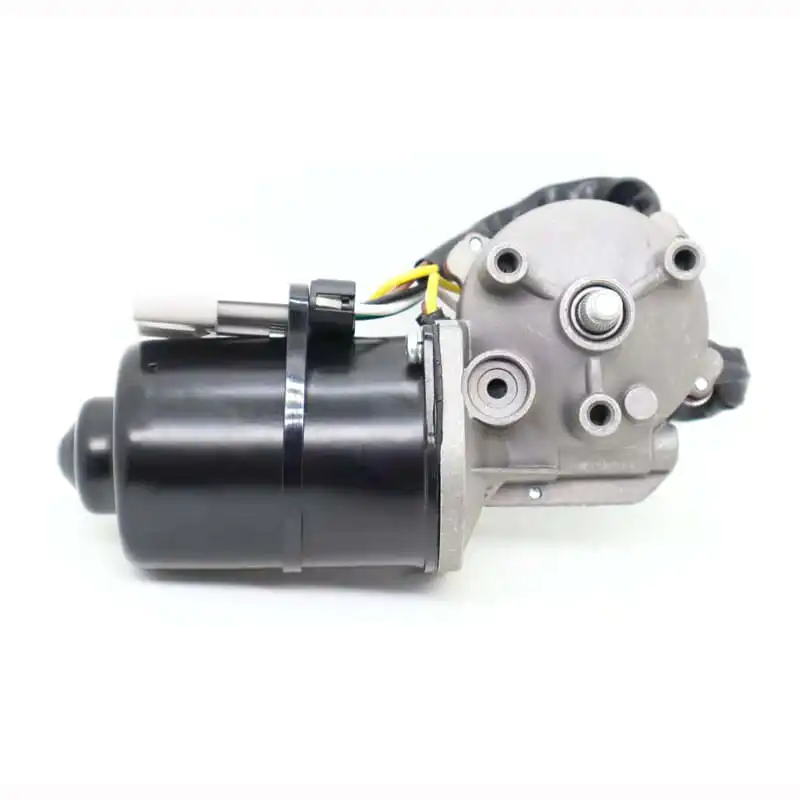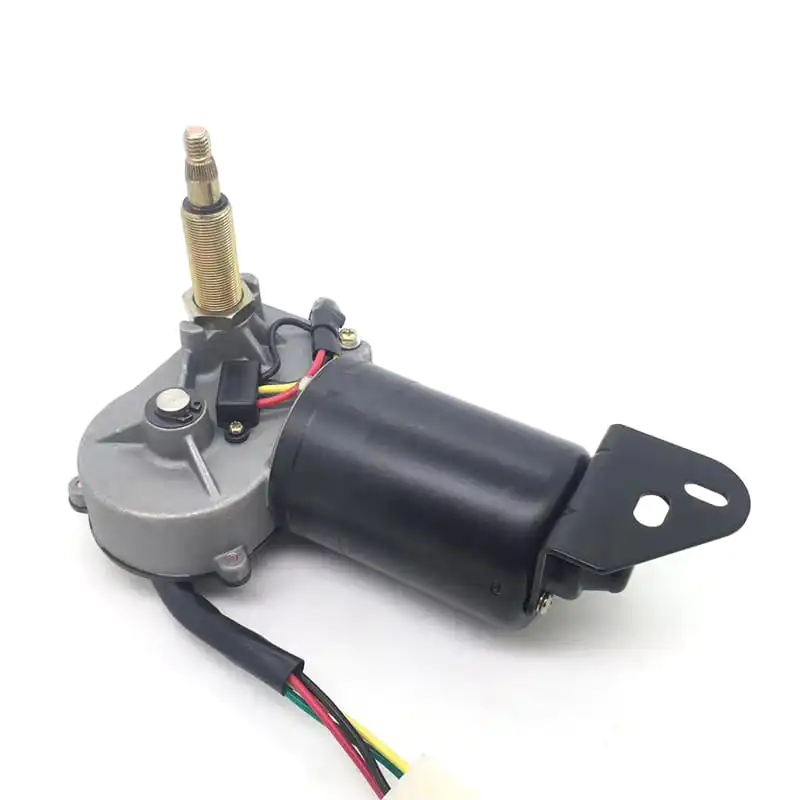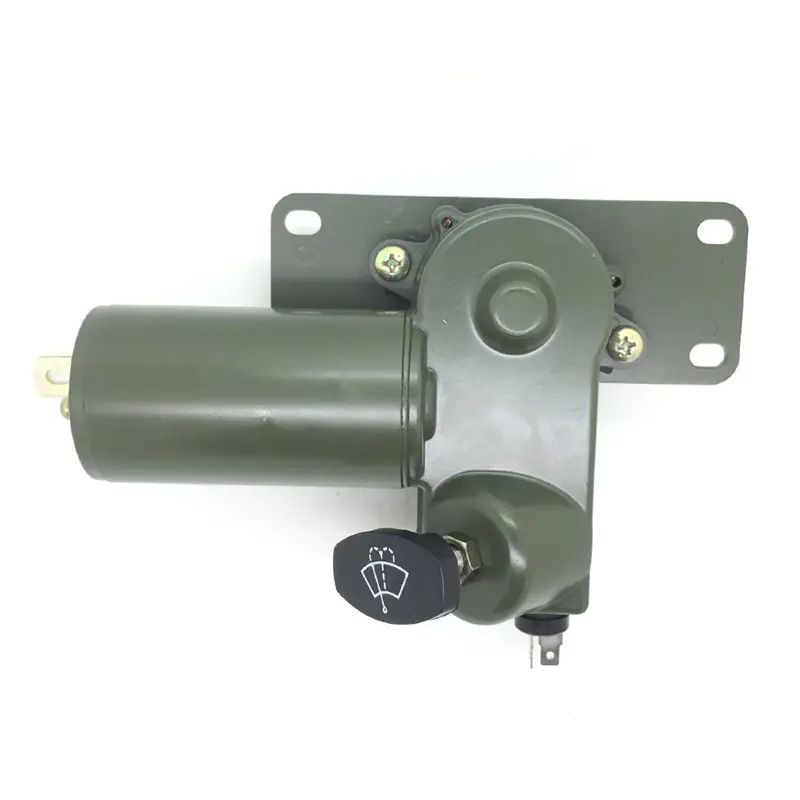
A wiper system that works fine on a passenger vehicle can fail within weeks when installed on an excavator or wheel loader operating on a muddy construction site. The operating environment is simply different — heavier debris load, longer daily run cycles, harsher vibration, wider temperature swings — and the motor at the center of that system needs to reflect those differences in its design. For equipment manufacturers and procurement teams sourcing components at scale, identifying the right wiper motor manufacturer for this application category is not a minor specification decision. It determines whether the cab visibility system holds up reliably across thousands of operating hours or becomes a recurring maintenance issue that field teams learn to expect.
A standard automotive wiper windshield motor is designed around the conditions a passenger car encounters: occasional rain, relatively clean glass, moderate temperatures, short daily operating intervals. Construction machinery inverts nearly all of those assumptions.
On a typical construction site, the cab glass accumulates a combination of mud splatter, dust, fine aggregate particles, and in wet conditions, water mixed with sediment. The wiper system clears this repeatedly across shifts that may run many hours continuously. The motor driving the wiper arm does not get the intermittent rest cycles that a passenger vehicle system enjoys — it runs, sometimes at a fixed speed, across the full working day.
Beyond duty cycle, the mounting environment matters. Construction equipment vibrates substantially during operation. Bucket loading, ground compaction, and track operation all transmit mechanical vibration through the chassis to every mounted component, including wiper motor housings and their internal gear trains. A motor that tolerates the vibration profile of a road vehicle may develop internal wear, connector loosening, or brush contact instability at a much faster rate when subjected to the vibration frequency and amplitude typical of heavy equipment.
Torque is the performance dimension where the gap between passenger vehicle wiper motors and construction equipment wiper motors is most direct.
On passenger vehicles, the wiper system clears a relatively clean glass surface against modest resistance. On construction equipment, the wiper blade moves through heavy accumulations of mud and debris that increase resistance substantially — particularly at the start of a sweep cycle when buildup has had time to consolidate. Insufficient torque output causes the motor to stall, the wiper arm to skip or drag, or the blade to leave uncleared bands across the driver's field of view. None of these outcomes are acceptable in an environment where the operator depends on full visibility for safety.
What this means practically:
Specifying a motor with adequate torque margin for the application's debris load profile is not conservative — it is what keeps the system functioning across the full service interval rather than degrading progressively.
Construction equipment operates in environments that expose every cab-mounted component to water, mud, and fine particulate. The ingress protection rating of the wiper motor determines how well it resists these environmental factors over its service life.
IP ratings are expressed as two digits — the first indicating protection against solid particle ingress, the second against liquid ingress. For construction machinery applications, motors are typically specified at ratings that provide meaningful protection against dust penetration and water jets from cleaning or rain exposure.
Why this matters operationally:
A motor that meets the IP specification for its installation position on the equipment will hold its performance characteristics across a much longer service life than one that is marginally rated for the environment. This is one area where the upfront specification decision has a direct, predictable effect on field reliability.
Construction machinery electrical systems differ from passenger vehicle systems in their standard operating voltage. While most passenger vehicles use 12V electrical systems, a large share of heavy construction equipment — excavators, cranes, large wheel loaders, mining trucks — uses 24V systems.
This has a direct implication for wiper motor sourcing:
The practical sourcing guidance is to confirm the electrical system voltage on the specific equipment platform before specifying or ordering motors in volume. Mixed fleets — where some machines use 12V and others use 24V — require either separate part numbers or a deliberately selected dual-voltage solution with verified performance across both voltages.
For procurement teams sourcing wholesale wiper motor quantities across multiple equipment platforms, building voltage specification into the part number system from the start avoids the field problems that arise from mixed voltage inventory.
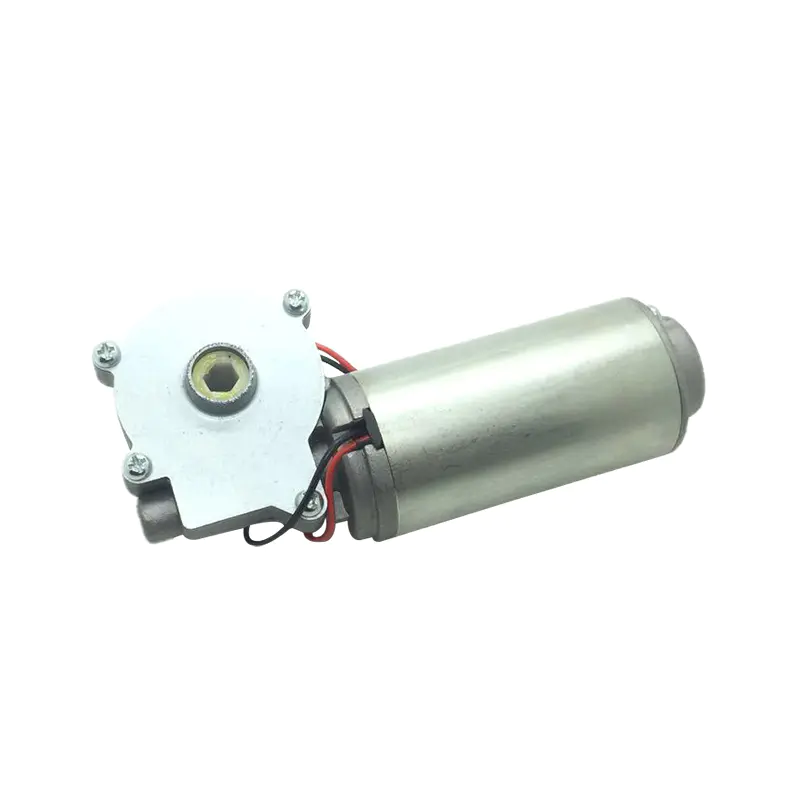
The gear train between the motor armature and the output shaft determines how the motor's rotational output translates into the torque and speed the wiper arm actually receives. In construction equipment applications, this assembly handles substantially higher mechanical loads than automotive equivalents.
Key design factors that affect durability in heavy-duty applications:
In equipment categories where cab access for maintenance is time-consuming or requires specialized tools, motors with durable gear trains reduce the frequency of service interventions and the associated downtime cost.
| Specification Dimension | Passenger Vehicle Standard | Construction Machinery Requirement |
|---|---|---|
| Operating duty cycle | Intermittent, weather-dependent | Extended, often continuous during shifts |
| Torque output | Sized for clean glass loads | Sized for mud, debris, and high-resistance conditions |
| IP ingress protection | Moderate — road splash and rain | Higher — wash-down, mud spray, dust exposure |
| Vibration tolerance | Road surface vibration profile | Heavy equipment vibration — higher amplitude and frequency |
| Electrical system voltage | Typically 12V | Commonly 24V, some 12V platforms |
| Gear train material | Often plastic or light alloy | Metal preferred for load and debris handling |
| Expected service life | Moderate duty cycle hours | Extended — aligned with equipment service intervals |
Reading across the comparison makes the specification gap concrete. It is not that construction equipment requires a completely different technology — it is that the same fundamental motor design needs to be built to materially higher standards across multiple performance dimensions simultaneously.
Wiper systems on construction machinery are not always mounted in the same position relative to the cab. Excavators, wheel loaders, cranes, and mobile crushers each have cab geometries that may place the wiper motor in different orientations and exposure positions.
This matters for specification in several ways:
Equipment manufacturers building new platforms often work with motor suppliers to confirm that the selected motor's mechanical design suits the specific installation geometry rather than assuming that a motor certified for the application type will perform equally well in any mounting orientation.
Sourcing wiper windshield motors for construction equipment at wholesale volumes introduces considerations that single-unit procurement does not surface as visibly. Consistency across a production run matters differently when a specification issue affects hundreds or thousands of installed units rather than one.
Factors worth evaluating when establishing a wholesale wiper motor supply relationship:
The China wiper motor manufacturing sector includes suppliers across a wide quality spectrum. The practical guidance for wholesale buyers is to evaluate production process transparency, documentation practices, and technical responsiveness alongside unit pricing — because the cost of field failures across an installed base is a substantially larger number than the per-unit cost difference between quality tiers.
The procurement process for industrial wiper motors does not differ fundamentally from sourcing other critical cab components, but it does require more diligence than sourcing commodity parts where performance variation is low and field consequences are minor.
A structured evaluation approach:
The specifications that matter for construction equipment wiper motors are not complicated in principle, but they require a manufacturer who has built them into the product design rather than adapted an automotive design for a different market. The gap between a motor that passes a specification sheet and one that holds up reliably across years of heavy equipment operation often comes down to manufacturing decisions — materials, tolerances, sealing design, gear train construction — that are not visible in catalog listings. Wenzhou Junt Power Technology Co., Ltd. manufactures wiper motors for construction and industrial machinery applications, covering the torque, IP protection, voltage, and duty cycle requirements that heavy equipment operating environments demand. For OEM manufacturers finalizing component specifications, procurement teams evaluating wholesale wiper motor supply options, or engineers working through application-specific mounting and connector requirements, reaching out directly with the application details is the practical starting point. Getting the specification right before a production run begins is considerably more straightforward than addressing field performance issues after equipment has reached customers.

Tel:+86-0577-66009580
Mobile: +86-18858801083
E-mail:juntmotor@126.com
Whatsapp:+8618858801083
WeChat: +86-18858801083
 WeChat

Automotive Reduction Motors Manufacturer

 +86-0577-66009580
 juntmotor@126.com
 Language
  English
 Português