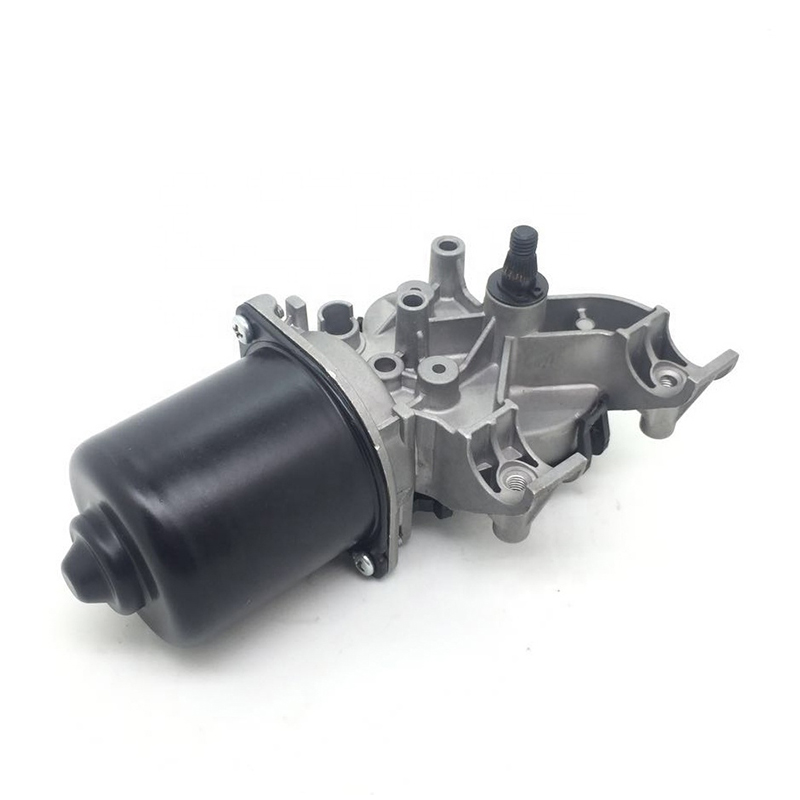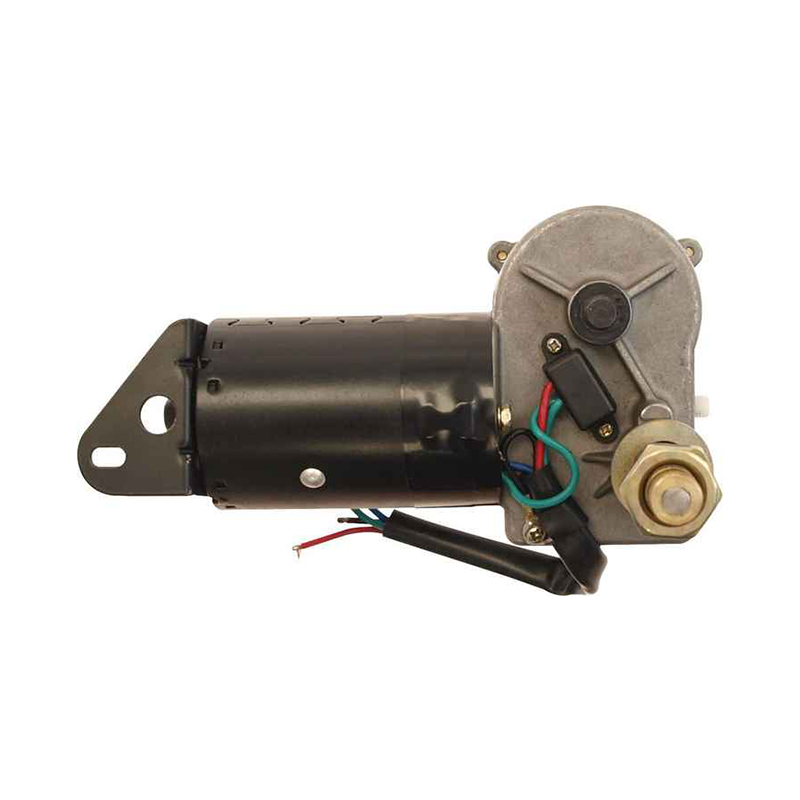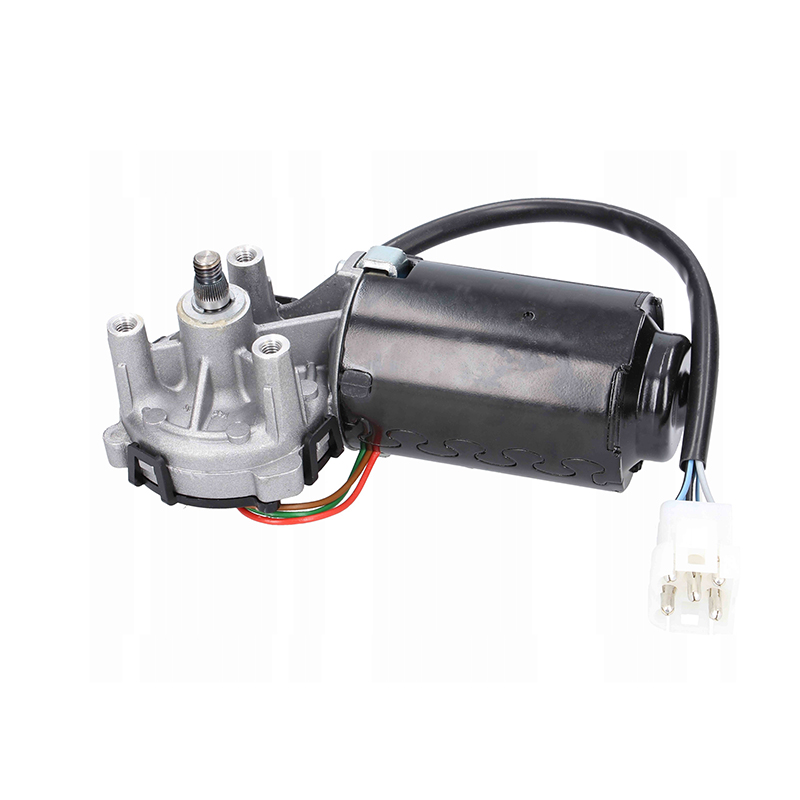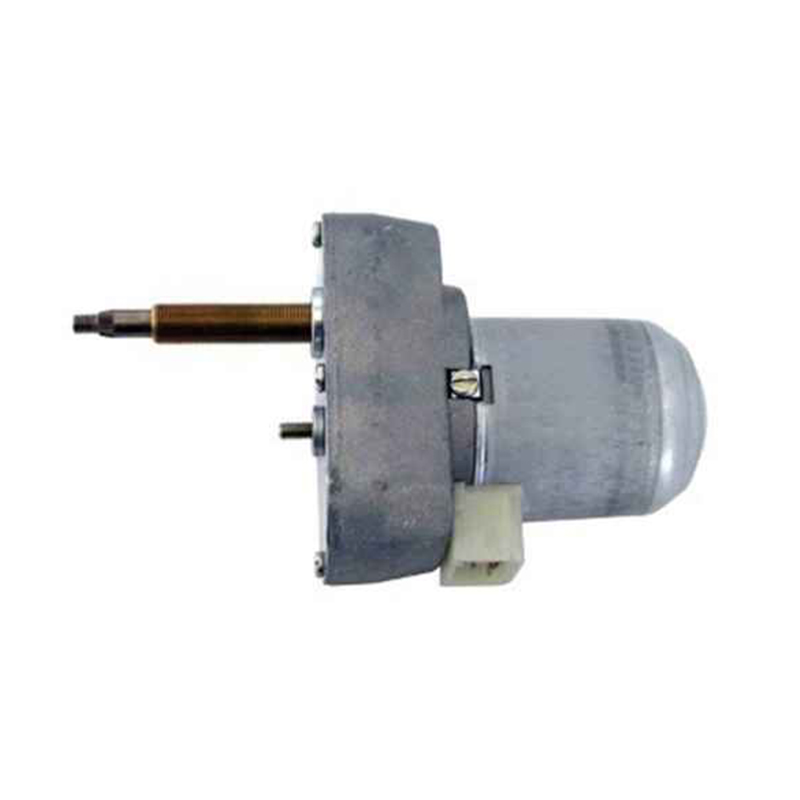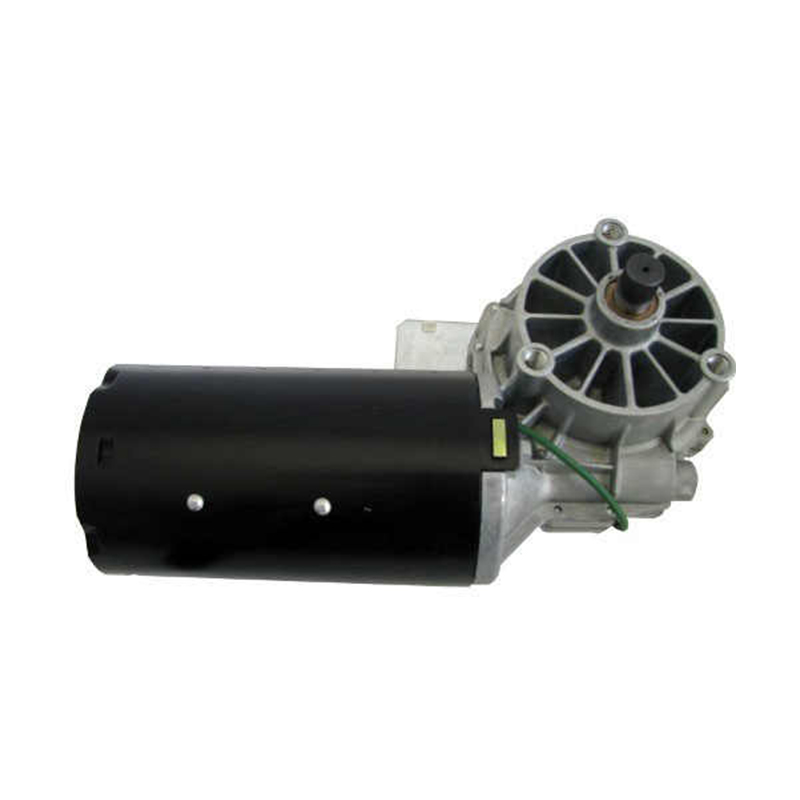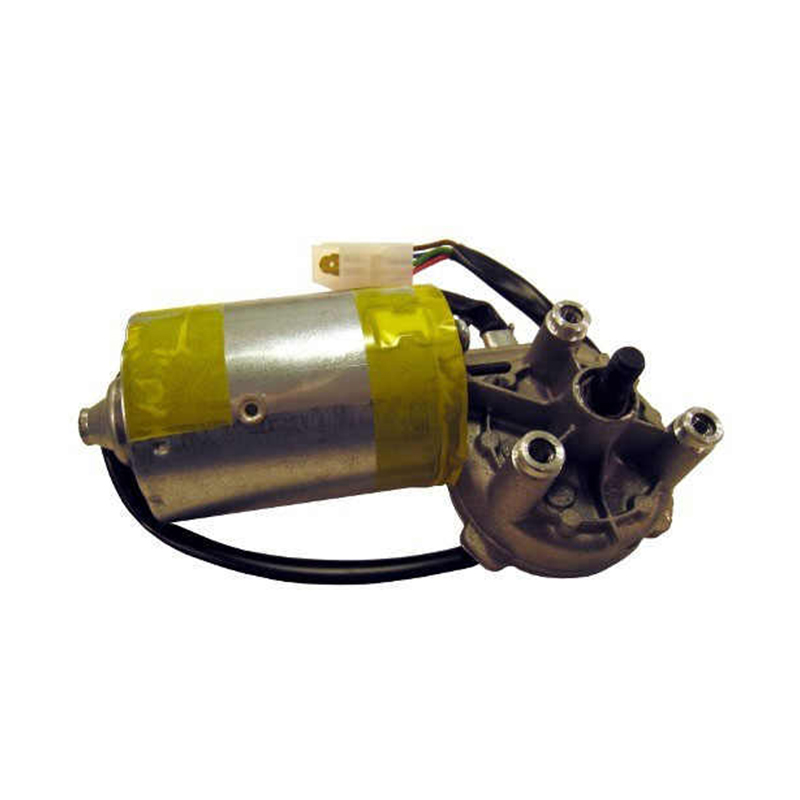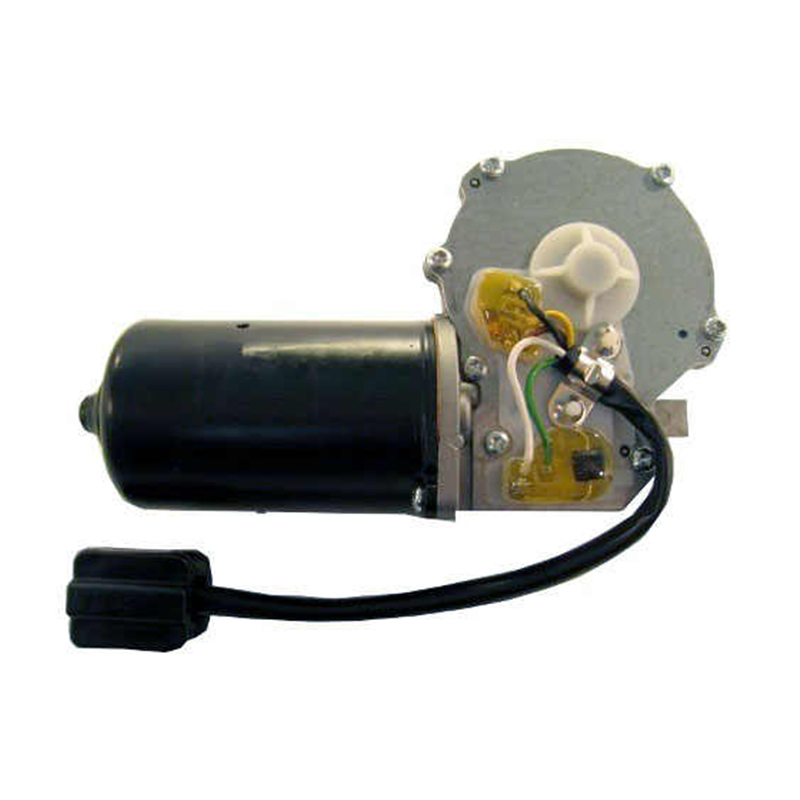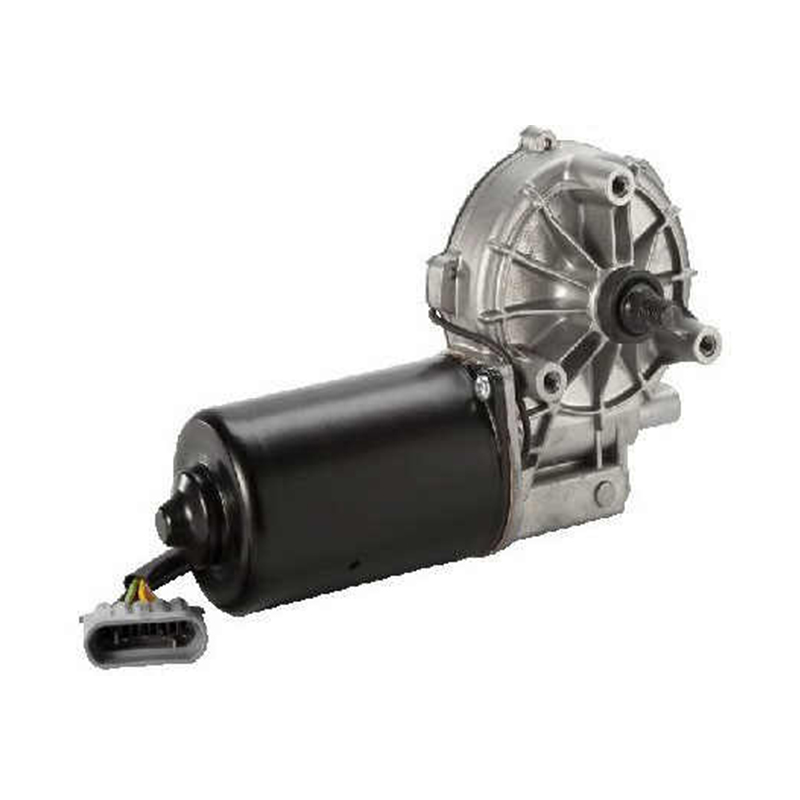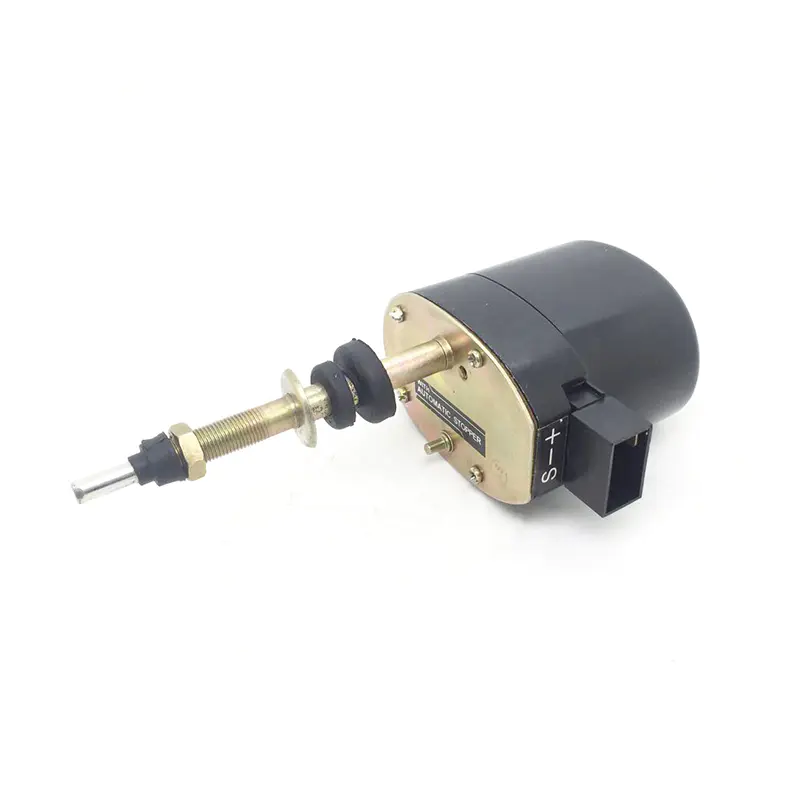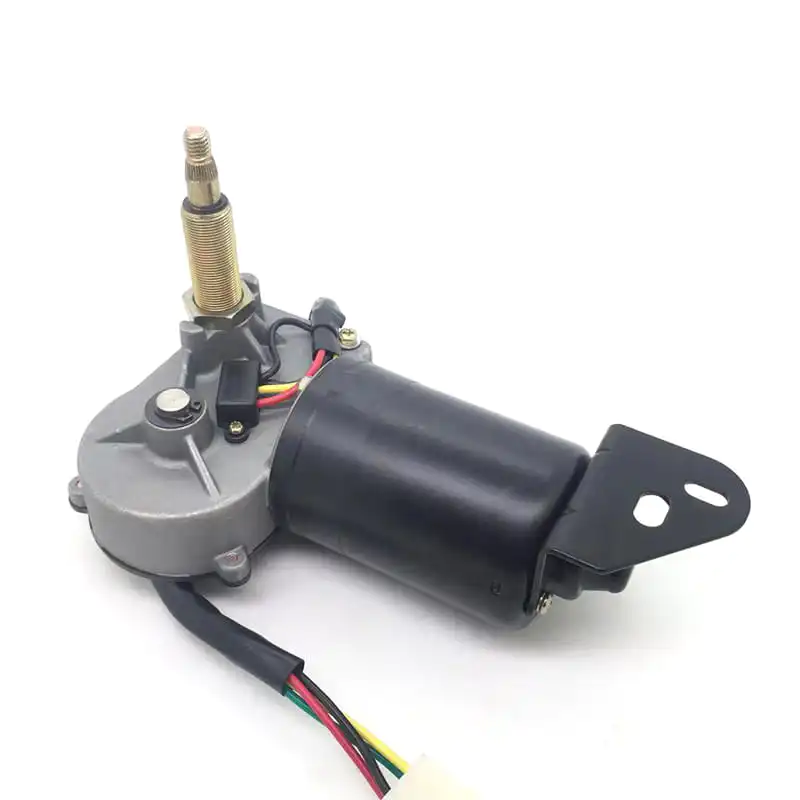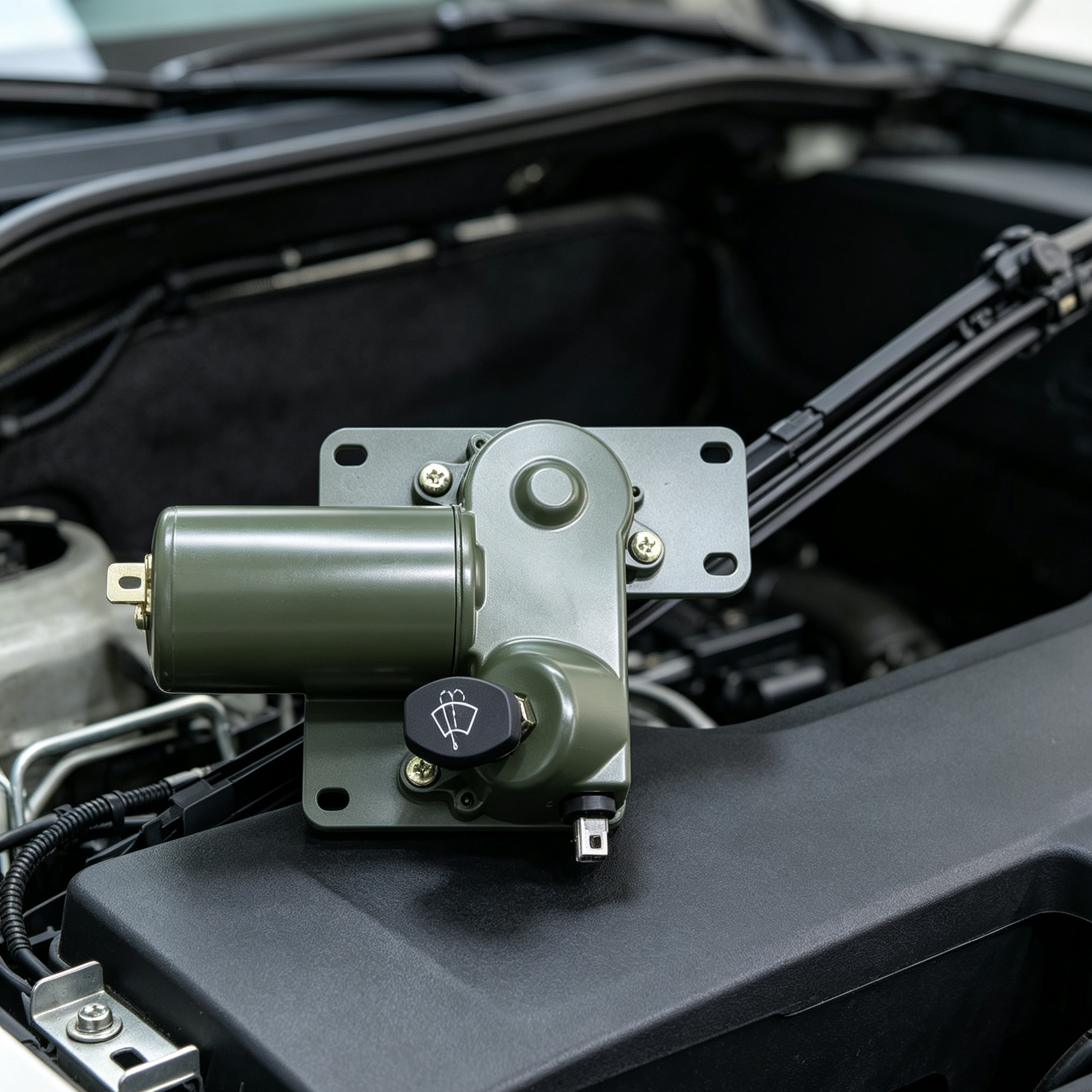
A windshield wiper may look like a genuinely simple moving component when you glance at it from the driver's seat, but its performance depends heavily on the motor tucked away behind the dashboard. The motor provides the movement that travels through the gear system and reaches the wiper linkage during every single pass across the glass. Any weakness or imbalance in this chain can genuinely change how the wiper moves during a rainy commute.
The basic task is converting electrical energy into controlled mechanical movement without fuss. The motor must create enough turning force to move the wiper assembly, while maintaining a genuinely steady motion throughout the sweep. It also needs to support repeated changes in direction, because the blades don't rotate continuously in one direction like a fan would.
This makes motor design genuinely closely connected with wiping efficiency experienced by the driver. A motor that delivers movement in a controlled way can help the blade maintain a genuinely more stable path across the windshield. A poorly matched motor and transmission system may create irregular movement, delays, or unnecessary vibration felt through the steering column.
The design also needs to consider changing resistance encountered during actual use. A wiper can experience genuinely different levels of resistance as it moves across the windshield during a storm. Water, dirt, cold conditions, and changes in blade contact can all influence the load placed on the motor at any given moment.
For a Wiper Motor Manufacturer, the challenge is therefore genuinely broader than simply producing a motor that turns on command. The complete motor assembly needs to transform electrical input into suitable movement, transmit force through its gears, and support repeated wiping cycles across years of service.
The internal construction of the motor genuinely affects how effectively it produces and transfers movement to the linkage below. Different components work together to create the rotation that eventually drives the wiper mechanism across the glass.
The motor needs to respond to changes in operating conditions without producing unnecessary fluctuations felt by the driver. Stable movement is genuinely important, because the wiper blade follows a defined path across the windshield every single stroke.
Irregular motor behavior can become genuinely visible as uneven blade movement noticed from inside the car. The housing also has a genuine role to play in this system. It holds the internal components in position and provides a stable structure for the moving parts inside.
A suitable housing can help keep the motor assembly aligned during repeated operation across seasons of use. The connection between the motor and the gear system is another genuinely important area worth examining closely.
The motor's rotation needs to enter the transmission system in a controlled manner rather than with slack or play. If the connection allows unwanted movement, some of the motor's effort may get lost before it reaches the wiper linkage at the far end.
Torque is the turning force produced by the motor as it spins under load. It's genuinely important, because the wiper assembly must overcome resistance while moving across the windshield during a downpour.
A motor with insufficient torque may genuinely struggle when resistance increases suddenly. The wiper movement can become slower or less stable under demanding conditions like heavy snow buildup.
This is why torque needs consideration together with the actual mechanical load placed on the system rather than in isolation. More torque isn't automatically the answer to every design problem that comes up during development.
Excessive force can place additional demands on gears, shafts, linkages, and mounting points throughout the assembly. The goal is creating a suitable balance between available torque and the movement required by the wiper assembly during normal operation.
Torque also interacts genuinely with wiping speed throughout the cycle. The motor needs to move the blade at a controlled pace, rather than simply moving as quickly as possible without regard for the glass surface. A Wiper Windshield Motor therefore needs development around the complete operating cycle, from the first stroke to the last.
The motor must provide enough turning force during movement, while also handling the repeated change in direction at the ends of the wiping path where stress concentrates.
The gear system connects the motor's rotation with the movement required by the wiper assembly attached below. It can change the relationship between rotational speed and turning force, making it a genuinely key part of the overall design worth getting right.
The motor itself can rotate continuously like a small engine, while the windshield wiper needs an alternating movement instead. The gear and output arrangement helps convert the motor's rotation into the mechanical action required by the linkage connected to the blades.
Gear engagement also genuinely affects how smoothly force gets transferred through the assembly. If the gears don't work together properly, unwanted movement can appear in the output shaft unexpectedly. This may contribute to noise, vibration, or uneven wiper motion noticed by the driver during a drive.
Material selection and gear construction also genuinely matter to the outcome. The gears experience repeated contact during normal operation across thousands of wiping cycles, so their surfaces need to remain suitable for continued movement over years of use.
Wear can gradually affect the relationship between the teeth and change how force gets transmitted through the system. This explains why gear design can genuinely influence wiping performance even when the motor itself is working normally on its own.
A windshield wiper doesn't simply spin in a circle like a fan blade would. It moves back and forth across a defined area of glass with each pass. This repeated oscillation places genuinely particular demands on the motor and its transmission system throughout every cycle.
At the end of each sweep, the direction of movement genuinely changes suddenly. The system must handle this transition without creating excessive delay or unwanted movement felt through the wiper arm.
A controlled transition can help the blade follow its intended path genuinely more smoothly across the windshield during a storm. Oscillation control also affects the relationship between motor movement and the wiper linkage connecting to the blade.
The gear arrangement, output shaft, and linkage all contribute genuinely to this behavior together. The motor provides the driving force, but the entire movement system determines how that force becomes an alternating sweep across the glass surface.
Wiping efficiency depends partly on how consistently this sweep gets maintained cycle after cycle. The control system can also influence how different wiping modes behave when the driver switches settings during a storm.
When the motor needs to operate at different movement rates, the relationship between electrical input and mechanical output becomes genuinely important to get right.
Noise is often one of the genuinely most noticeable signs of mechanical interaction inside a wiper motor sitting behind the dash. A motor may still operate while producing sounds that indicate friction, gear contact, looseness, or vibration within the assembly.
Some operating noise is genuinely normal and expected during use. However, unwanted noise can affect the perceived quality of the vehicle system as a whole in the eyes of a customer.
For manufacturers, understanding the source of the sound is genuinely more useful than simply trying to make the motor quieter through brute-force insulation. Gear contact is one possible source worth checking first.
If moving parts don't interact smoothly, small impacts can travel through the motor housing and beyond. These vibrations can then get transferred to nearby vehicle components like the dashboard or windshield frame.
The housing can genuinely influence this behavior as well throughout the assembly. A structure that doesn't adequately support the internal components may allow vibration to spread genuinely more easily through the car body.
For a China Wiper Motor Manufacturer, this area can be genuinely important when developing products for different vehicle applications sold across markets. Different vehicle structures may respond genuinely differently to the same motor behavior, so the motor assembly needs development with its installation environment in mind from the start.
Wiper motors get designed for repeated movement, rather than occasional operation like a garage door opener. This makes durability testing a genuinely important part of product development before a motor reaches the market.
Testing can reveal how the motor, gears, output shaft, and housing respond after repeated cycles spanning thousands of strokes. It can also show whether noise, vibration, or movement behavior changes as the components continue to operate over time.
A useful testing process should examine the motor as a complete assembly, rather than in isolated pieces on a bench. Looking only at the motor's rotation may not reveal problems that occur later in the transmission or output mechanism downstream.
Testing can also involve genuinely different operating conditions faced on the road. The resistance experienced by the wiper system can change depending on the windshield surface and environmental conditions like ice or heavy dust.
Product development therefore benefits from considering more than one operating situation before finalizing a design. These observations can provide genuinely useful information for design improvement going forward into the next model year.
The purpose isn't simply confirming that the motor operates at all when first switched on. It's understanding how the complete assembly behaves as repeated movement continues across years of ownership.
Modern wiper motor development is moving toward genuinely closer coordination between the motor, gear system, output mechanism, and control system working as one unit. Each part affects the final wiping movement, so isolated component development may not fully address system-level behavior experienced on the road.
A Wiper Motor Manufacturer may therefore examine the complete path from electrical input to blade movement across the glass. Motor construction determines how force gets created, gears influence how that force gets transferred, and the output mechanism controls how the wiper changes direction at each end of the sweep.
This approach also creates room for application-specific development tailored to different vehicle platforms. Different windshield shapes and wiper arrangements can place genuinely different demands on the motor assembly installed underneath.
A flexible design strategy allows manufacturers to adjust the motor and transmission relationship according to the intended application on a given vehicle model. China Wiper Motor production also forms part of this wider manufacturing environment supplying global automakers.
Product development can involve material selection, housing construction, gear production, assembly methods, and testing procedures across the whole supply chain. Attention to each stage can genuinely influence the behavior of the finished motor once it's installed.
The Wiper Windshield Motor is therefore becoming more than a simple source of movement tucked behind the dashboard. Its design influences torque delivery, gear interaction, oscillation control, noise, vibration, and repeated operation across the vehicle's working life. These factors remain genuinely closely connected as manufacturers refine motor structures for different windshield wiping applications on the road today.


Tel:+86-0577-66009580
Mobile: +86-18858801083
E-mail:juntmotor@126.com
Whatsapp:+8618858801083
WeChat: +86-18858801083
 WeChat

Automotive Reduction Motors Manufacturer

 +86-0577-66009580
 juntmotor@126.com
 Language
  English
 Português