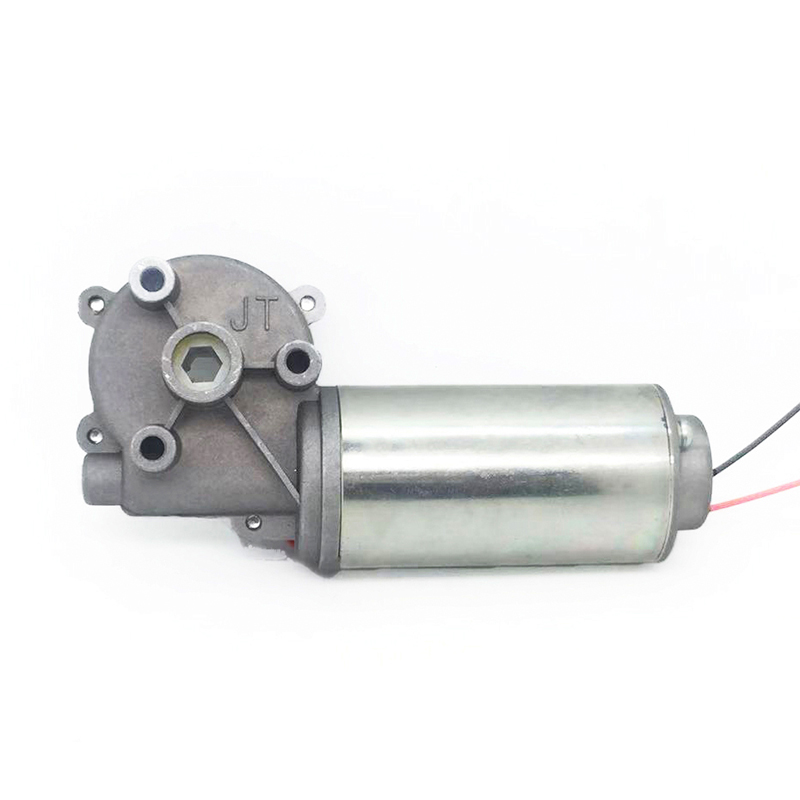
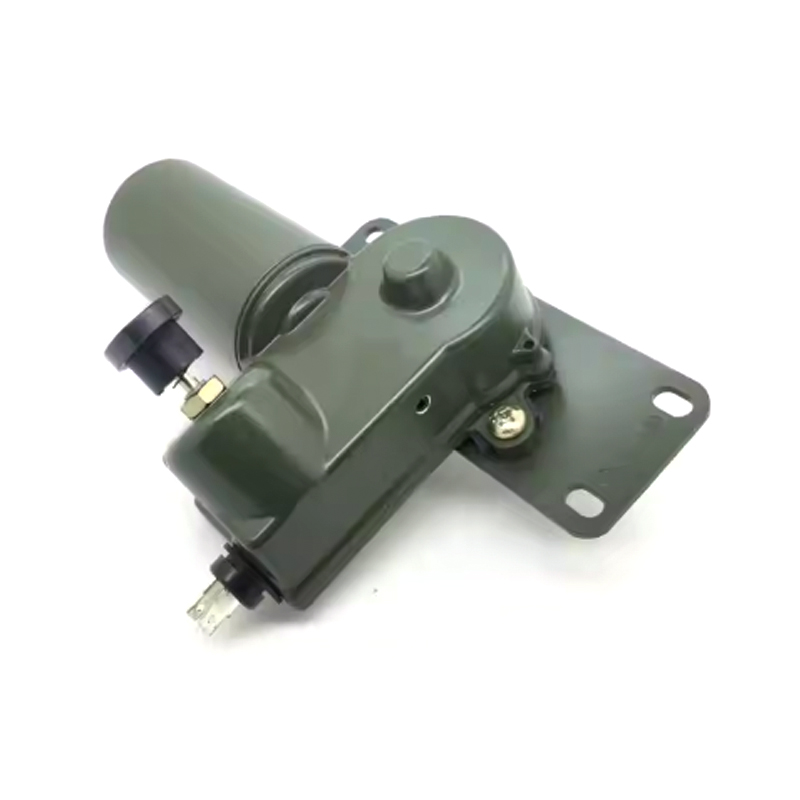
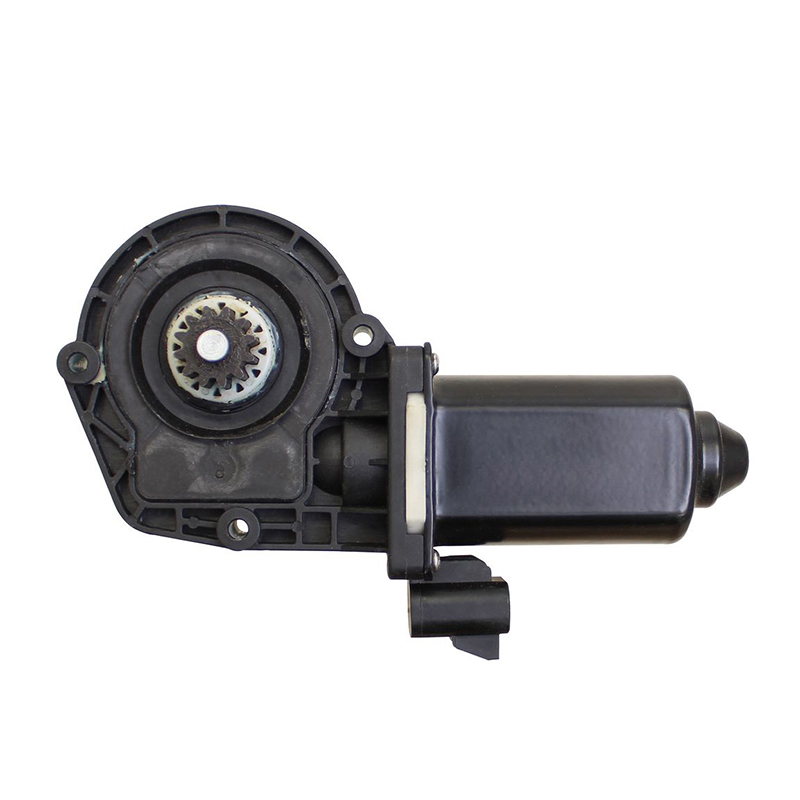
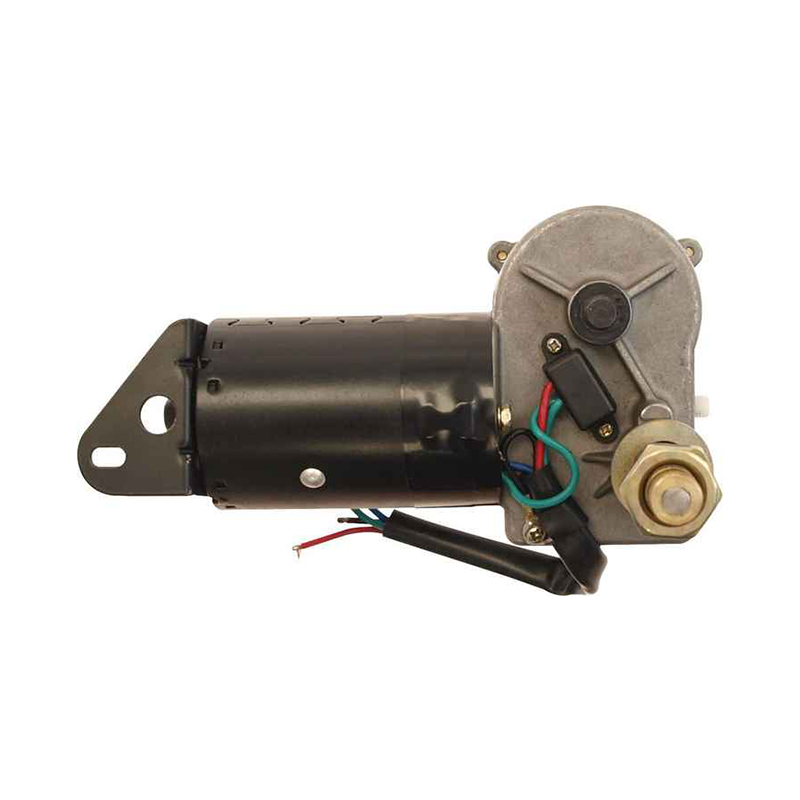
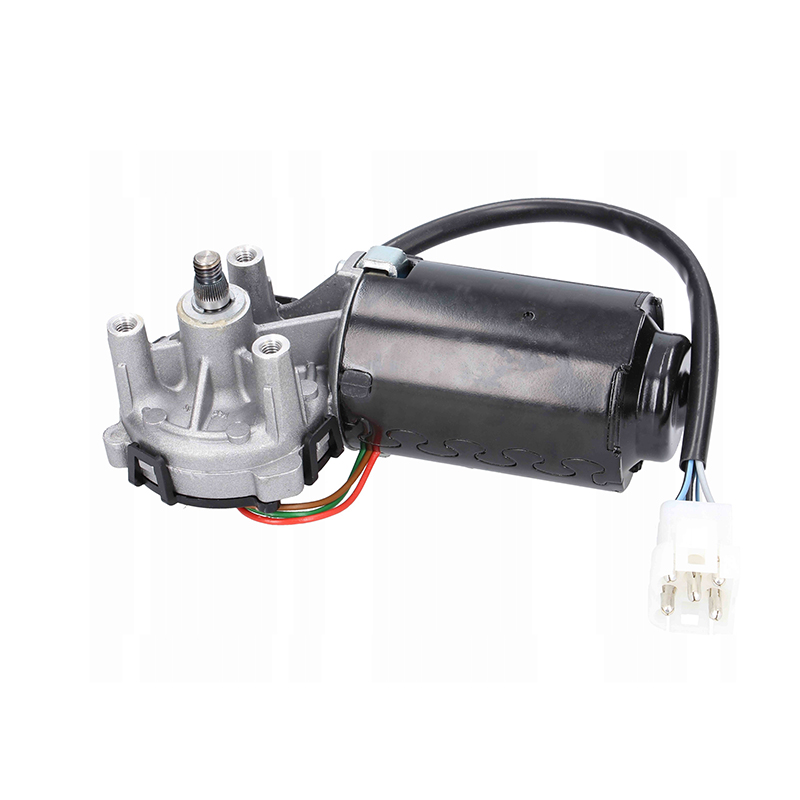
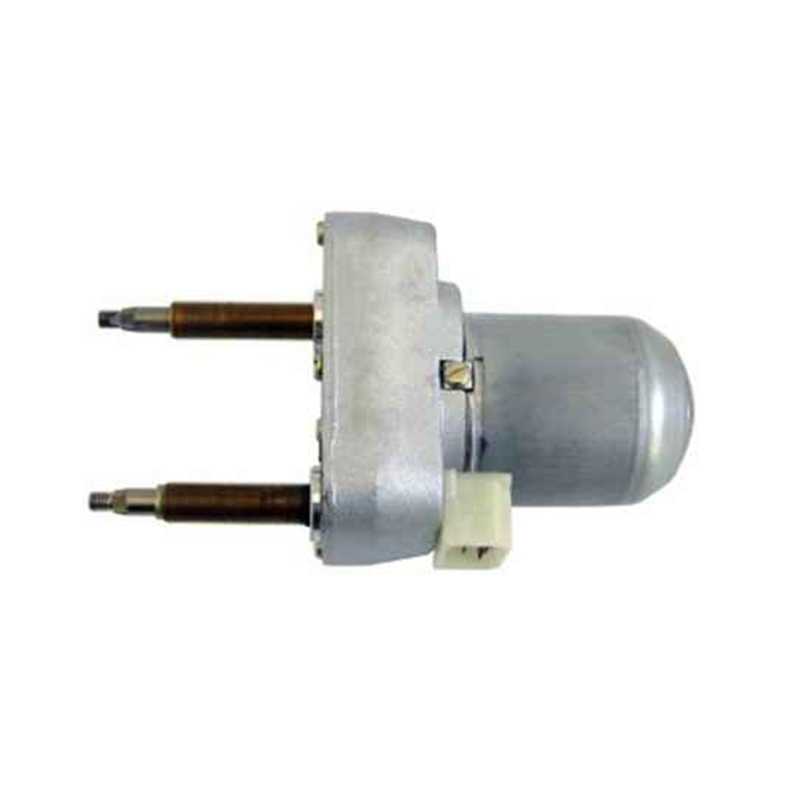
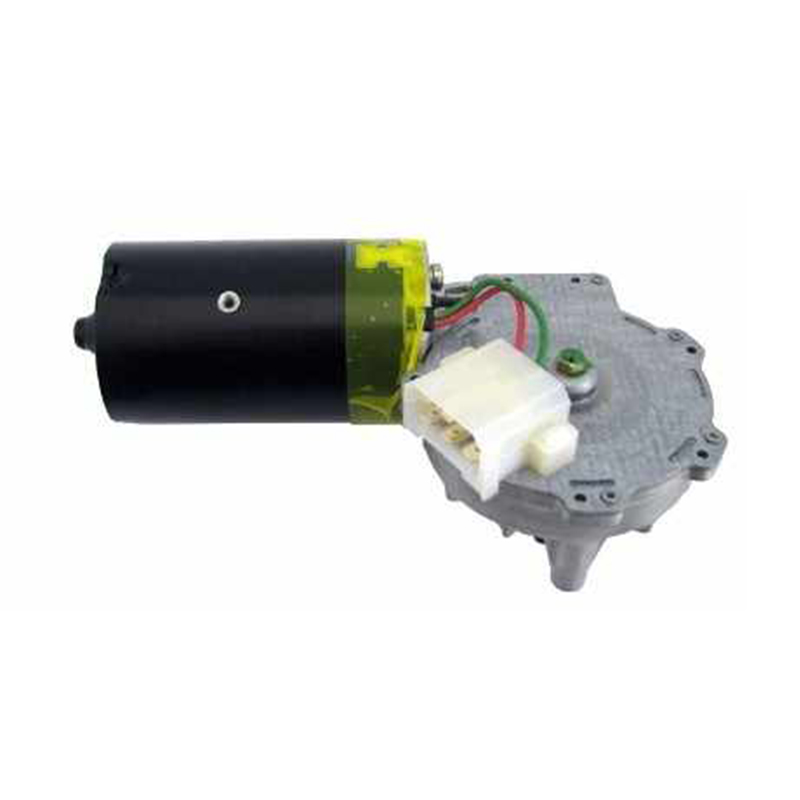
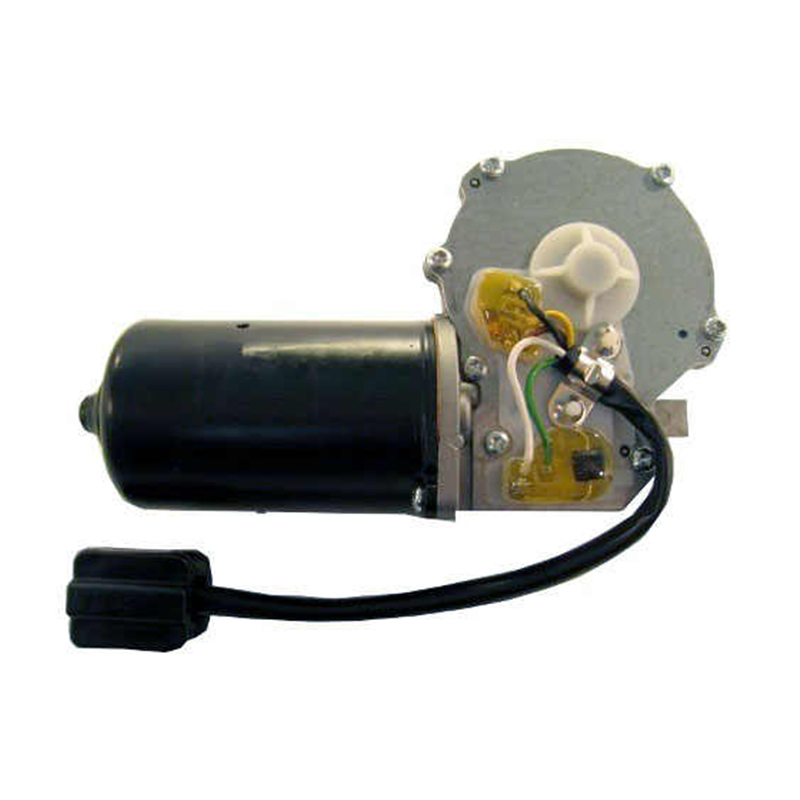
Vertical equipment is used in all kinds of industrial and commercial settings where loads have to move up, move down, or stay in place. Material lifts, warehouse hoists, platform lifts, dumbwaiters, stage equipment, service lifts, and similar systems all rely on motors to create the movement needed by the machine.
But motor power is only one part of the setup. A vertical machine also needs to control the load when the motor stops, especially when something is suspended above the ground. That is where a brake system comes into play.
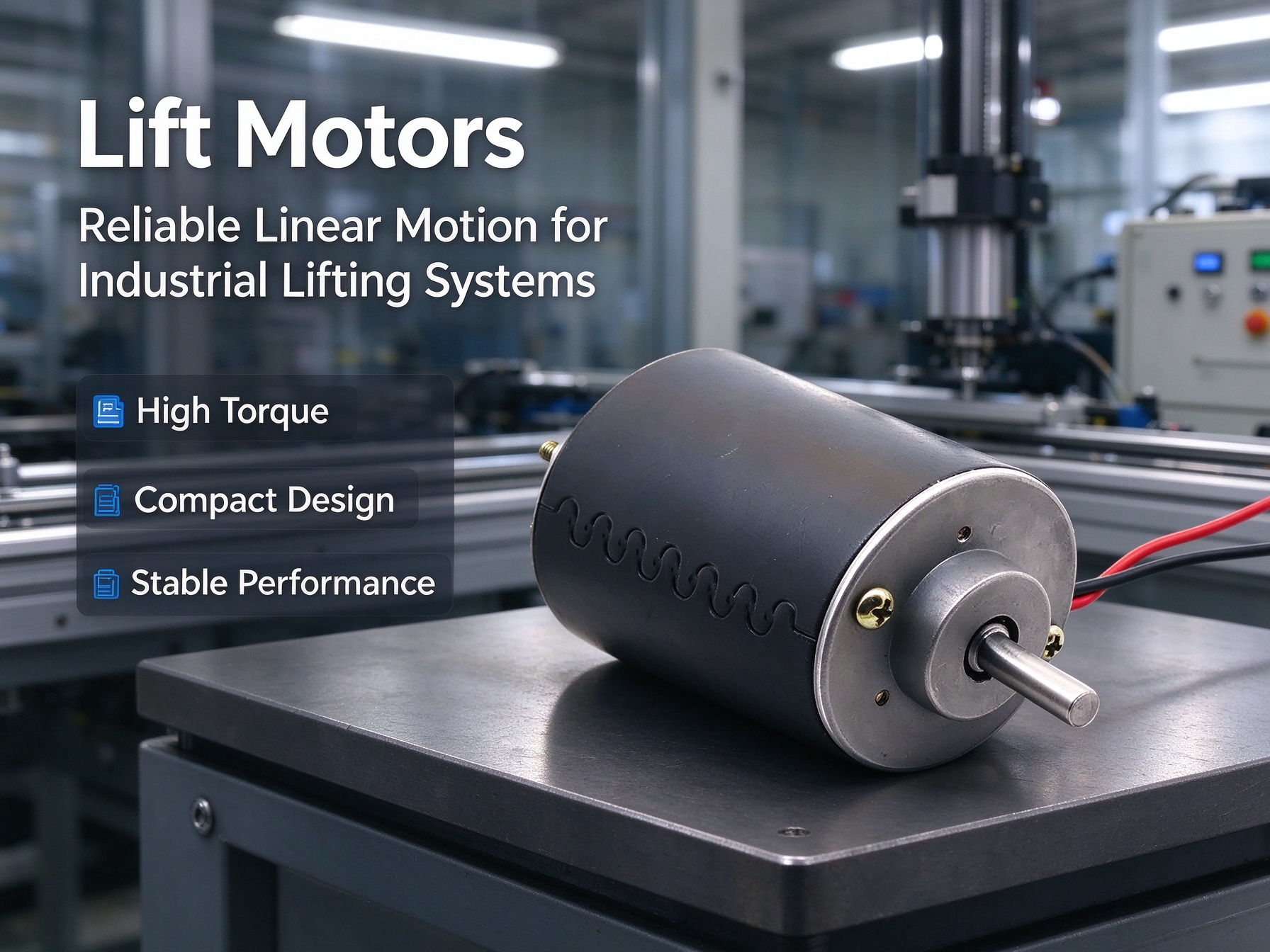
For manufacturers, system integrators, distributors, and OEM buyers, the connection between brakes and Lift Motors is worth looking at closely. The motor creates the rotation, while the brake helps stop or hold that movement when required.
As lifting equipment becomes more automated and compact, motor-and-brake combinations are becoming more common. Still, brake requirements aren't the same for every machine. Load, lifting mechanism, operating cycle, and applicable safety requirements all need to be considered.
Why Brake Systems Matter in Vertical Equipment
A horizontal conveyor doesn't usually deal with gravity in quite the same way as a lifting machine. With vertical equipment, gravity is always acting on the load.
Once the motor stops producing torque, a suspended load can put force back through the transmission. Depending on the design, the result could be unwanted lowering, rollback, or gradual movement.
A brake provides resistance or holding force when the drive is no longer actively moving the load.
Depending on the machine, the brake may be used for:
- Holding a load at a set position
- Stopping rotational movement
- Limiting unwanted movement after shutdown
- Supporting an emergency stop function
- Holding the mechanism while loading or unloading
The brake shouldn't be looked at as a separate part in isolation. Its performance is connected to the gearbox, drum, pulley, screw, chain, coupling, and control system around it.
How a Brake Works With a Lift Motor
A common design places an electromagnetic brake on or close to the motor shaft.
With a typical spring-applied, electrically released brake, springs create the clamping force when electrical power is removed. When the brake receives the correct electrical signal, the electromagnetic mechanism releases it and allows the motor shaft to turn.
The basic operating sequence is fairly simple:
Power available → brake released → motor operates
Power removed → brake applied → shaft is held or stopped
Of course, real products can be more complicated. Brake torque, release voltage, response time, mounting method, and other specifications can vary between motor configurations.
One thing buyers shouldn't overlook is brake torque. It needs to be selected based on the actual load and transmission arrangement. Motor power by itself doesn't tell you what brake is needed.
Brake Torque Needs to Match the Actual Load
Brake torque is one of the key specifications to check when selecting a motor for vertical equipment.
The required value depends on how the machine is built. Gear reduction, drum diameter, pulley arrangement, screw mechanism, and mechanical efficiency can all change the torque that reaches the brake.
A basic calculation can give an initial idea of the resisting torque created by the load. From there, the designer needs to consider the actual machine conditions, including acceleration, deceleration, friction changes, and the safety factors required for the equipment.
So, saying “the motor is rated at X kW” isn't enough to select the brake.
| Factor |
Effect on brake selection |
| Load mass |
Influences required holding torque |
| Gear reduction |
Changes torque seen at different shafts |
| Drum or pulley diameter |
Affects lifting torque |
| Mechanical efficiency |
Changes actual torque demand |
| Acceleration/deceleration |
Affects dynamic braking conditions |
| Duty cycle |
Influences heating and wear |
| Stop frequency |
Affects brake service life |
| Installation angle |
Can affect mechanical loading in some systems |
These factors should be checked against the actual machine design instead of relying only on a general motor specification.
Holding a Load and Stopping a Load Are Different Requirements
It's useful to separate two jobs that a brake may have to do: holding and stopping.
In one machine, the brake may mainly hold a stationary load after the motor has already stopped. In another, it may also need to stop moving equipment within a certain time or distance.
Those two situations put different demands on the brake.
For example, if the motor controller handles most of the deceleration and the brake engages when the shaft is nearly stopped, the brake may see relatively little dynamic braking work.
A brake that is repeatedly used to stop a moving load is a different story. More braking energy means more heat and usually more friction-material wear.
For equipment designers, understanding which job the brake actually needs to perform makes it easier to select the right configuration and control method.
How Motor Controllers Affect Brake Performance
Many modern lifting systems use variable-speed drives or other electronic motor controllers.
The controller can manage motor speed and deceleration, while the mechanical brake provides the holding force. Getting the timing between these two parts right can make a noticeable difference to machine behavior.
For instance, the controller may slow the motor down first and then apply the brake when the shaft is close to zero speed. The exact sequence depends on the machine and its control architecture.
Timing matters here. If the brake engages too early, it can add unnecessary mechanical stress. If it engages too late, the load may move farther than expected.
For OEM projects, the motor supplier and control-system designer should agree on brake release timing, coil voltage, control signals, and any feedback requirements before the final configuration is selected.
Braked Lift Motors Can Simplify Equipment Integration
Putting the brake together with the motor can reduce the number of separate components around the drive system.
That can be helpful when machine space is tight. Instead of finding room for several separate parts, the manufacturer may be able to use an integrated drive assembly.
A factory-integrated configuration may include:
- Motor
- Gearbox
- Electromagnetic brake
- Encoder or speed feedback
- Mounting flange
- Output shaft
This doesn't mean an integrated unit is automatically suitable for every machine. Service access, heat dissipation, mounting space, and compatibility with the machine frame still need to be checked.
For B2B buyers, it's better to review the complete motor-and-brake assembly. Selecting the motor and brake separately without checking their mechanical and electrical interfaces can create problems later during installation.
Brake Response Time Can Matter in Automated Lifting
Brake response time can become important when vertical equipment is automated.
There is usually a short delay between an electrical control signal and the point when the brake actually releases or engages. The delay can depend on brake construction, coil characteristics, air gap, friction materials, temperature, and other factors.
On a basic manually operated lift, a small timing difference may not cause much trouble. On an automated machine that stops at fixed positions again and again, it can be more noticeable.
That's why testing the motor and brake with the actual controller and mechanical load is useful. A specification sheet can provide the basic numbers, but real machine behavior still needs to be checked.
Duty Cycle Influences Brake Life and Thermal Performance
Brakes are mechanical parts, so they wear over time. How quickly that happens depends on the number of operations, braking energy, load, speed, environment, and maintenance.
A small lift that runs several times a day obviously doesn't put the same demand on its brake as a warehouse lifting system that starts and stops throughout a working shift.
For applications with frequent operation, buyers should ask about:
- Braking frequency
- Maximum stopping speed
- Brake torque
- Thermal limits
- Friction material
- Expected service life
- Adjustment or replacement requirements
A brake that works well for occasional holding may not be suitable for repeated dynamic braking at higher speeds. The operating pattern needs to be part of the selection process.
Environmental Conditions Can Affect Brake Selection
Vertical equipment isn't always installed in a clean indoor factory. Dust, moisture, temperature changes, and chemicals can all affect motor and brake components.
A dry warehouse and a humid industrial site don't place the same demands on a brake enclosure or its materials.
Temperature deserves attention too. During long operating periods, the motor and brake can build up heat. Higher temperatures can affect electrical parts, insulation, lubricants, and friction materials.
When ordering Lift Motors for an OEM project, buyers should tell the manufacturer where and how the motor will be used. A standard configuration may work in one environment but need changes for another.
Why Emergency Stopping Requires a System-Level Approach
A mechanical brake can be an important part of a vertical lifting system, but it shouldn't automatically be treated as the only safety device.
The required safety setup depends on the equipment type and the standards or regulations that apply. Limit switches, overload protection, mechanical restraints, control interlocks, overspeed protection, and other devices may also be involved.
An emergency stop, for example, may involve the controller, motor drive, brake, and additional safety components. All of them need to work together as intended.
Because of this, manufacturers should not size a brake only from the nominal load rating. The required safety function, possible failure modes, and stopping behavior need to be considered during machine design and validation.
What B2B Buyers Should Ask a Lift Motor Manufacturer
When sourcing motors for vertical machinery, a few specific questions can make supplier discussions much more useful.
| Buyer question |
Why it matters |
| What brake type is used? |
Confirms the operating principle |
| What is the rated brake torque? |
Helps match the brake to the mechanism |
| Is the brake spring-applied or another design? |
Affects control behavior |
| What is the brake release voltage? |
Must match the control system |
| What is the response time? |
Relevant to automated motion |
| What duty cycle is supported? |
Helps estimate wear and heating |
| What environmental ratings are available? |
Important for installation conditions |
| What maintenance is required? |
Supports lifecycle planning |
| Can an encoder be integrated? |
Useful for position and speed feedback |
| Are custom mounting or shaft options available? |
Helps OEM integration |
A supplier should be able to provide technical drawings, electrical information, performance data, and installation requirements so the buyer can check whether the motor fits the machine.
Testing Is Especially Important for Bulk Orders
For a large order, checking a sample is a useful step, but it doesn't replace production quality control.
The factory can set inspection points for motor performance, brake operation, electrical parameters, dimensions, and final assembly. Depending on the equipment, testing might include no-load operation, loaded operation, brake release checks, holding checks, temperature monitoring, and noise or vibration inspection.
The test conditions should be written down clearly. Otherwise, the factory and buyer may have different ideas about what “passed” means.
For OEM customers, it's also worth agreeing on acceptance criteria before mass production starts. This gives both sides a common reference for factory inspection and incoming quality checks.
Custom Brake Configurations Can Support Different Lift Applications
Vertical machines come in many different forms, so a standard brake setup won't always fit every project.
Depending on the manufacturer, customization may cover motor power, gearbox ratio, brake torque, shaft size, mounting arrangement, coil voltage, connector type, encoder integration, or housing design.
This can help when a machine builder has limited installation space or needs the motor to work with a particular control system.
But changes should be checked as a complete package. For example, changing the gearbox ratio changes the speed and torque relationship at the brake. Changing brake torque can also affect stopping behavior and mechanical loading.
Working directly with the motor manufacturer can make this process easier because the motor, gearbox, and brake can be considered together during development.
Brake Systems Are Becoming an Important Part of Lift Motor Selection
As vertical equipment becomes more automated and space is often limited, brake integration is becoming a practical part of Lift Motors selection.
A brake can help hold or stop a load when the motor is not driving it, but the actual brake specification needs to fit the machine. Brake torque, response time, duty cycle, environment, gearbox characteristics, and controller timing all matter.
For B2B buyers, it makes sense to look at the motor, brake, transmission, and control system as one drive package. Reviewing drawings, checking the required torque, testing samples under realistic conditions, and agreeing on production inspection criteria can make the sourcing process much easier to manage.

 WeChat


 +86-0577-66009580
 juntmotor@126.com
 Language
  English
 Português