A replacement wiper blade can have the correct length and still be the wrong part for a vehicle. The connector may not lock onto the arm, the blade may sit at the wrong angle, or its rubber edge may fail to follow the windshield properly. These problems are common when suppliers deal with vehicles from different manufacturers, production years and regional markets.
For Wiper Blade Suppliers, maintaining fitment accuracy involves considerably more than keeping a list of blade sizes. They need to track connector designs, windshield dimensions, arm configurations and changes made during vehicle production. A mistake in any of these details can lead to installation failures, poor wiping results and unnecessary returns.
Connector Differences Are Often the First Obstacle
Not all wiper arms use the same attachment system. Even vehicles from the same manufacturer may have different connectors across model ranges.
Common designs include:
Suppliers often maintain a collection of adapters to cover these different mounting arrangements. Some universal blades are supplied with several adapter options, allowing one blade design to fit multiple arm types.
The difficulty is that an adapter can appear to fit without being properly secured. Its dimensions, locking position and installation direction must all match the arm. A loose connection may become particularly problematic when the wipers operate at high speed or encounter resistance from ice and debris.
Blade Length Must Account for the Entire Wiping Movement
Choosing a blade based only on the length of the original part can lead to problems. The replacement must also clear the opposite blade, windshield trim and surrounding vehicle body throughout its movement.
Driver-side and passenger-side blades are often different lengths. Rear wipers introduce another variation because their mounting arrangements and glass dimensions may differ substantially from those of front wipers.
An overly long blade can overlap the opposite wiper or strike the edge of the windshield. A blade that is too short leaves part of the driver's field of vision unwiped.
Suppliers normally combine original equipment references, vehicle application data and physical measurements when establishing blade dimensions. For an unfamiliar vehicle, a full sweep test is particularly useful because it reveals interference that cannot always be identified through measurements alone.
Windshield Curvature Changes the Required Blade Design
Two windshields with similar dimensions may have very different surface profiles. The difference becomes important when the wiper moves across the glass.
If the blade cannot follow the windshield curvature, contact pressure may become uneven. One section of the rubber edge may wipe properly while another leaves water streaks or skips across the glass.
This is one reason suppliers offer several blade constructions.
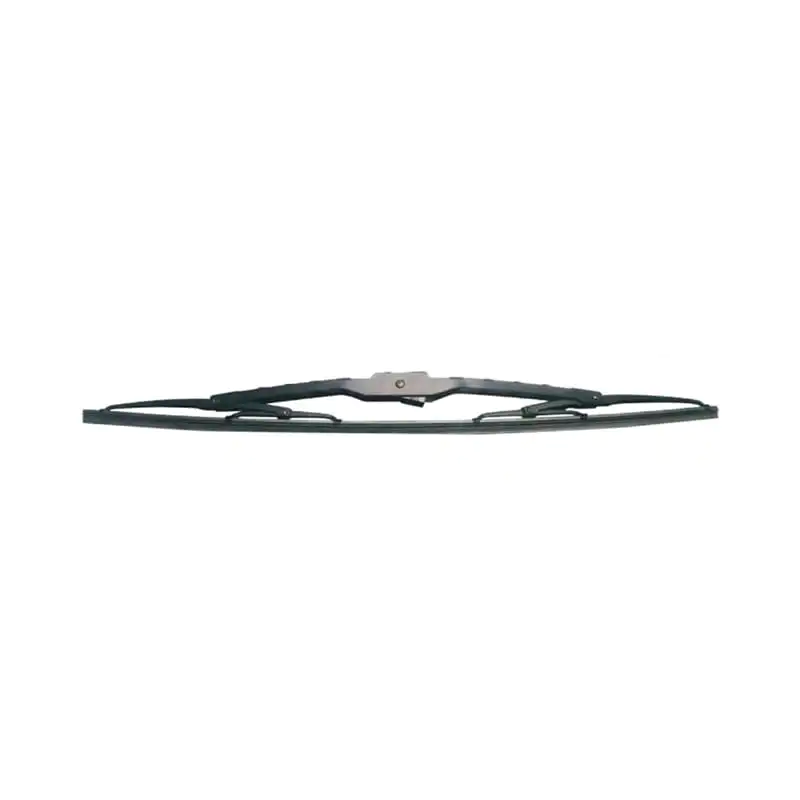
Conventional frame blades use a metal structure with multiple pressure points to distribute force along the rubber edge. Their articulated frame helps accommodate changes in windshield curvature.
Beam blades use an integrated flexible structure rather than a traditional exposed frame. Their curved profile helps maintain contact across many windshield shapes.
Hybrid blades combine a supporting frame structure with a more enclosed aerodynamic design. They offer a different balance of flexibility, support and protection.
None of these designs is automatically suitable for every vehicle. Rubber hardness, blade curvature and pressure distribution still need to be checked against the windshield being served.
Model-Year Changes Can Make Old Fitment Records Unreliable
A vehicle's name and model designation do not always identify its wiper requirements accurately.
Automakers may change the wiper arm, windshield dimensions or mounting interface during a model update. Regional versions can also have different configurations. Even trim variations deserve attention when the wiper system is not identical across the range.
Suppliers generally need to record several vehicle details:
For example, a blade listed for a particular vehicle model may fit the earlier production version but fail to connect properly to a revised arm on a later version.
Checking only the model name is therefore risky. Original equipment references, manufacturer documentation and physical samples provide additional ways to verify the application.
How Suppliers Check Fitment Before Approving a Blade
Catalog information provides a starting point, but it cannot replace physical testing. A blade may have the correct dimensions and connector reference yet still perform poorly once installed.
Suppliers need to examine the complete installation, from the locking connection to the final wiping movement.
| Fitment factor | Verification method | Potential problem if incorrect |
|---|---|---|
| Connector type | Physical arm and adapter inspection | Loose or incompatible installation |
| Blade length | Measurement and vehicle application data | Incomplete wiping or interference |
| Windshield curvature | Contact and pressure distribution checks | Streaking or missed areas |
| Installation clearance | Full movement inspection | Contact with trim or adjacent blade |
| Rubber performance | Wiping and durability tests | Noise, streaking or premature wear |
| Vehicle application | Model-year and part-number verification | Incorrect catalog listing |
Testing should include both installation and operation. The blade needs to lock securely, move through its intended wiping range and maintain appropriate contact with the glass.
Rubber performance may also need evaluation under different temperatures and environmental conditions. A blade that wipes quietly in a warm workshop may behave differently after exposure to cold weather or prolonged sunlight.
Fitment Databases Need Regular Updating
For suppliers serving large aftermarket markets, maintaining vehicle application records is a substantial part of the work.
A fitment database links vehicle models with blade lengths, connector types, product numbers and installation positions. Distributors use this information when searching for replacement products, particularly when they manage thousands of vehicle applications.
The difficulty comes from keeping those records current. New model releases, production revisions and regional variations can introduce compatibility differences that older catalog entries do not reflect.
Suppliers should compare database records against original equipment part numbers and verified vehicle information. When a new application is added, physical samples can help confirm whether the listed connector and blade dimensions are correct.
Packaging also plays a practical role. Clear identification of compatible vehicles, model years, installation positions and adapter requirements reduces confusion after products reach distributors and retailers.
What OEM and Wholesale Buyers Should Ask Suppliers
A supplier's ability to manage fitment should be examined alongside blade material, manufacturing quality and price.
For buyers handling multiple vehicle brands, the quality of application data can have a direct effect on inventory management. Incorrect listings create returns, replacement shipments and additional work for customer service teams.
Before approving a supplier, check whether it can provide:
It is also worth asking how the supplier handles a newly discovered fitment error. Correcting the affected product listing and checking related applications can prevent the same mistake from appearing in subsequent orders.
Fitment Accuracy Starts Before the Blade Reaches the Customer
The work involved in supplying replacement wiper blades begins long before packaging and delivery. Connector dimensions, blade length, glass curvature and vehicle production changes all need to be checked against the intended application.
For Wiper Blade Suppliers, a well-maintained compatibility database is useful, but it must be supported by engineering checks and actual vehicle testing. For distributors and OEM buyers, that verification is particularly important when purchasing blades for a large and varied vehicle range.

Tel:+86-0577-66009580
Mobile: +86-18858801083
E-mail:juntmotor@126.com
Whatsapp:+8618858801083
WeChat: +86-18858801083
 WeChat

Automotive Reduction Motors Manufacturer

 +86-0577-66009580
 juntmotor@126.com
 Language
 English
 Português